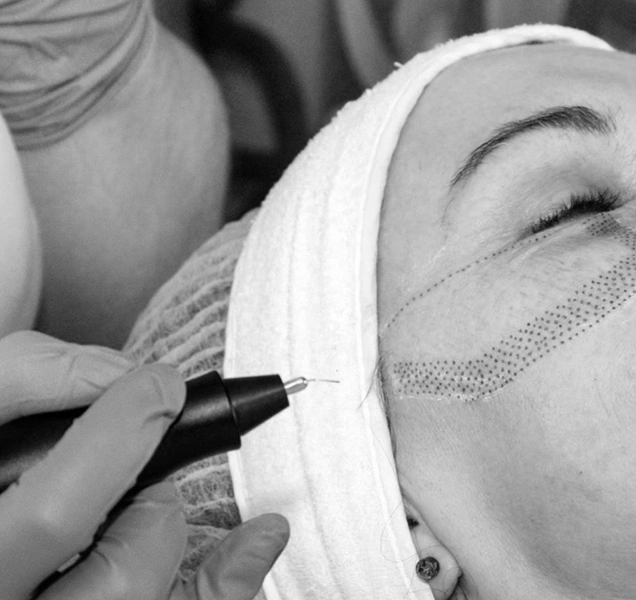
The Dragon Lift is a full-face protocol rather than a single technique, and its reputation for difficulty comes almost entirely from sequencing rather than from the individual work.
Mapping before you treat
Mark your vectors with the client upright. Laxity assessed with someone reclined is not the laxity they see in the mirror, and treating to a reclined map is how you end up with an uneven result.
Working order
Work upper face first, then mid, then lower. Swelling accumulates as you go, and treating the upper face last means assessing it through oedema created by everything you have already done.
Spacing the arcs
Consistent spacing matters more than tight spacing. Evenly placed arcs at a comfortable density contract smoothly; densely packed arcs risk confluent injury and a longer, less predictable heal.
Knowing when to stop
The most common error is treating to the limit of what the skin will take in one session. Two well-judged sessions twelve weeks apart consistently outperform one aggressive one, and carry a fraction of the risk.