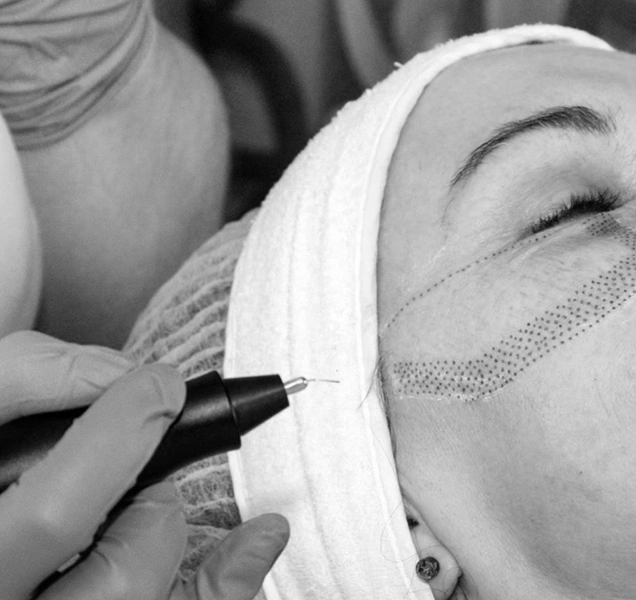
Plasma fibroblast is often described as “tightening”, which is true but unhelpfully vague. What is actually happening is a controlled thermal injury to the epidermis, and a signal sent to the dermis underneath it.
The mechanism
The device ionises the air between the probe tip and the skin, creating a small electrical arc. That arc sublimates a pinpoint of epidermal tissue — it converts straight from solid to gas, which is why there is no bleeding and no open wound.
The heat that reaches the papillary dermis is what matters clinically. It contracts existing collagen immediately, and triggers fibroblast activity that lays down new collagen over the following weeks.
Immediate versus delayed results
Clients see the immediate contraction and assume that is the result. It is roughly a third of it. The remainder arrives between weeks four and twelve, which is why the review appointment matters as much as the treatment.
Why this changes your planning
If the result is partly a healing response, then anything that impairs healing impairs the result. Smoking, poorly controlled diabetes and sun exposure are not just contraindication checkboxes — they are predictors of how good the outcome will be.
It also means spacing matters. Treating the same area again before the collagen response has finished gives you less, not more.